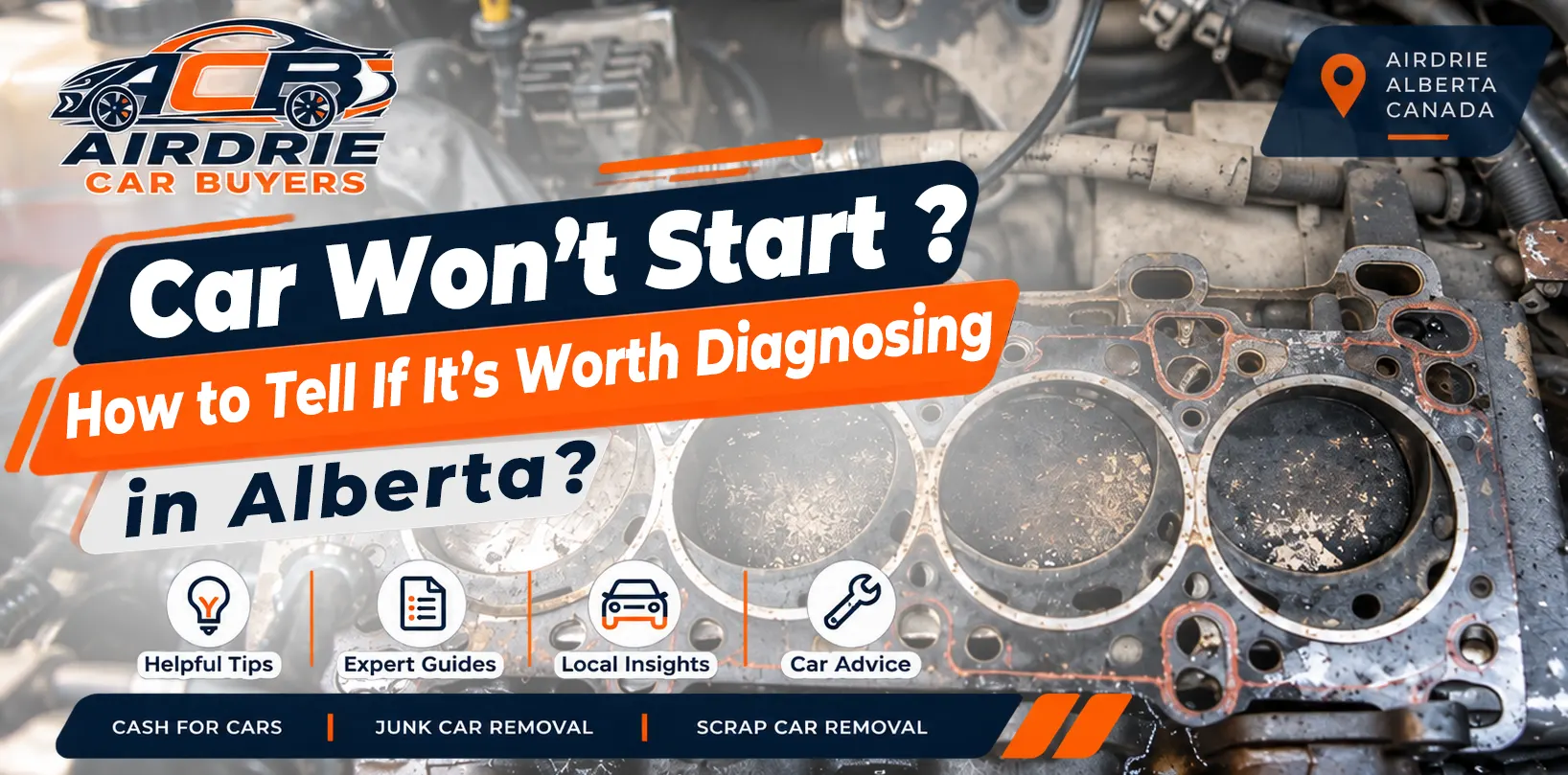


A head gasket quote is unusual among car repairs in one specific way: the initial number may not be the final amount you pay, particularly if additional damage is discovered once the cylinder head is removed. Committing to the repair without understanding that risk means agreeing to a number that could grow significantly before the job is done, sometimes by thousands of dollars, once the mechanic sees what’s actually inside the engine.
Is head gasket repair worth it? It depends on what the mechanic finds once the head comes off. A gasket-only repair is a very different decision than one that also turns up a warped head or cracked block. This guide covers how to recognize the symptoms, what the repair typically costs in Alberta, why the quote so often changes partway through, and why this repair pushes more owners toward selling than most others.
Get a No-Obligation Quote
Airdrie Car Buyers looks specifically at vehicles in this exact situation, cars with a head gasket diagnosis and a real repair quote in hand. Call or text (587) 600-1991, or email hello@airdriecarbuyers.ca, with a few details about your vehicle and the quote you’ve received, and you’ll get a straightforward answer on what it’s worth as-is.
What Are the Symptoms of a Blown Head Gasket?
Recognizing blown head gasket symptoms early matters more than with most repairs, since a handful of signs together are far more reliable than any single one on its own. Any one of these is worth a proper diagnosis. A mechanic can pressure-test the cooling system and check for combustion gases in the coolant to confirm what’s actually happening before any repair work starts.
- White smoke from the exhaust. Coolant burning in the combustion chamber produces a distinct white or grey smoke, different from the thin vapor a cold engine produces on a winter morning.
- Milky or frothy oil. Pull the dipstick or open the oil cap. Oil that looks like a milkshake means coolant has mixed into it, a strong sign the gasket has failed internally.
- Coolant disappearing with no visible leak. If you’re topping up coolant regularly but can’t find a puddle anywhere, it may be going somewhere it shouldn’t, into the oil or out the exhaust.
- Overheating that doesn’t have an obvious cause. A head gasket failure can disrupt the separation of coolant, oil, and combustion gases, which can lead to overheating even when the radiator and water pump are otherwise fine.
- A sweet smell from the engine bay. Coolant has a distinctive sweet odor, noticeable if it’s leaking internally or burning off.
How Much Does Head Gasket Repair Cost in Alberta?
Anyone searching for head gasket replacement cost Alberta shops charge will find estimates that vary quite a bit depending on the source. Canadian auto repair sources put a standard head gasket replacement in the range of $1,500 to $3,000 CAD for parts and labor, with the job typically taking 10 to 20 hours. That figure climbs meaningfully once a shop finds a warped head, a cracked head, or block damage, sometimes pushing well past $4,500 by the time everything is accounted for.
| Scope of Repair | General Cost Estimate |
|---|---|
| Gasket replacement only | $1,500 - $3,000 |
| Gasket plus head resurfacing | $2,500 - $3,500 |
| Gasket plus head replacement | $3,500 - $4,500 |
| Cracked block (engine-level repair) | $4,500 and up |
Labor accounts for most of this bill. Reaching the head gasket means removing a significant portion of the engine’s top end, typically 10 to 20 hours of work even before any additional damage is factored in. That’s why the parts themselves, often just a few hundred dollars, are the smaller half of the total.
Why Does the Quote Change Once the Head Comes Off?
This is the part that catches owners off guard, and it’s specific to this repair in a way that most others aren’t.
A head gasket fails because of heat and pressure, and those same forces can damage other parts of the engine at the same time. Once the mechanic actually removes the cylinder head, two things commonly turn up that weren’t visible before:
- A warped head, where the sealing surface is no longer flat enough to seat a new gasket properly and needs machining
- A cracked head or block, where the damage goes beyond what resurfacing can fix and the part itself needs replacing.
Other damage can also be present, including bearing damage if the engine has suffered severe overheating or oil contamination. Any of this turns a gasket-only repair into something considerably more expensive, and none of it is visible from outside the engine.
This is why the initial quote is better understood as a starting estimate than a final number. A shop can tell you what a clean gasket replacement costs before they start, but they can’t actually confirm whether the head is warped, cracked, or fine until it’s off the engine and on their bench.
Why Overheating Makes the Damage Worse
Overheating damage compounds the longer a vehicle keeps running with a failing gasket, which is part of why catching the symptoms early matters more here than with most repairs.
Aluminum cylinder heads can be susceptible to distortion from severe overheating, more so than the cast iron heads used decades ago. A gasket that fails gradually, with the engine still driven for days or weeks afterward, gives that heat more time to distort the head before anyone catches the problem. Continuing to drive while the engine is overheating can increase the risk of additional head or engine damage by the time it’s addressed.
Is It Worth Repairing a Head Gasket?
Whether the repair makes sense comes down to comparing the likely cost, including the chance it grows beyond the first quote, against what the vehicle is actually worth right now.
A newer vehicle in otherwise good condition may make the repair easier to justify, particularly when the scope stays close to the gasket-only end of the range. An older vehicle already showing other signs of wear, or one where the mechanic flags a warped head as likely before they’ve even started, points more toward selling instead. The uncertainty itself is part of the calculation: a $2,000 estimate that could become $4,500 is a much riskier bet than a $2,000 repair with a clear scope, which is exactly why this repair pushes more owners toward selling than a comparably priced job with a predictable outcome.

What Should You Ask the Shop Before Deciding?
A few direct questions clarify how much risk is actually in the quote you’ve been given.
- Has the cooling system been pressure-tested to confirm the diagnosis? A confirmed diagnosis is worth more than a guess based on symptoms alone.
- What’s the estimate if the head turns out to be warped or cracked? Getting this number upfront avoids a surprise mid-repair.
- Is there any visible sign of block damage already? Some shops can spot early warning signs before the head is even off.
- What’s the vehicle actually worth right now, not what it was worth new? This is the number the repair estimate needs to be measured against.
What If Repairing Isn't the Right Call?
A vehicle with a failed head gasket still has real value, even though it isn’t safe to drive far in its current state. Selling a car with engine problems is a specific situation, distinct from a routine used car sale, and worth understanding on its own terms before assuming the vehicle is only good for parts.
Get a No-Obligation Quote
Airdrie Car Buyers looks specifically at vehicles in this exact situation, cars with a head gasket diagnosis and a real repair quote in hand. Call or text (587) 600-1991, or email hello@airdriecarbuyers.ca, with a few details about your vehicle and the quote you’ve received, and you’ll get a straightforward answer on what it’s worth as-is.
Final Thoughts
Recognizing blown head gasket symptoms early matters more than with most repairs, since a handful of signs together are far more reliable than any single one on its own. Any one of these is worth a proper diagnosis. A mechanic can pressure-test the cooling system and check for combustion gases in the coolant to confirm what’s actually happening before any repair work starts.
- White smoke from the exhaust. Coolant burning in the combustion chamber produces a distinct white or grey smoke, different from the thin vapor a cold engine produces on a winter morning.
- Milky or frothy oil. Pull the dipstick or open the oil cap. Oil that looks like a milkshake means coolant has mixed into it, a strong sign the gasket has failed internally.
- Coolant disappearing with no visible leak. If you’re topping up coolant regularly but can’t find a puddle anywhere, it may be going somewhere it shouldn’t, into the oil or out the exhaust.
- Overheating that doesn’t have an obvious cause. A head gasket failure can disrupt the separation of coolant, oil, and combustion gases, which can lead to overheating even when the radiator and water pump are otherwise fine.
- A sweet smell from the engine bay. Coolant has a distinctive sweet odor, noticeable if it’s leaking internally or burning off.
A head gasket repair carries more uncertainty than most, since the number you’re quoted at the start often isn’t the number you end up paying once the head is actually off the engine. That uncertainty is worth treating as part of the decision itself, not a detail to worry about after committing to the repair.
Comparing the likely cost, including the realistic chance it grows, against your vehicle’s actual current value gives a clearer answer than reacting to the first quote alone. Sometimes that math still favors repairing, particularly on a newer vehicle with a confirmed, limited-scope diagnosis. Other times, especially on an older vehicle or one where a warped head already looks likely, selling as-is is the more sensible option. Getting a second opinion on the diagnosis before committing either way is rarely a bad idea.
Is head gasket repair worth it?
It depends on the vehicle's current value and how much the repair scope grows once the head is off. A confirmed, gasket-only repair on a newer vehicle is usually worth it, while a likely warped head on an older vehicle often points toward selling the vehicle instead.
What are the first signs of a blown head gasket?
White exhaust smoke, milky or frothy oil, coolant disappearing without a visible leak, unexplained overheating, and a sweet smell from the engine bay. Any of these on their own is worth a proper diagnosis rather than a guess based on symptoms alone.
How much does head gasket replacement cost in Alberta?
Canadian auto repair sources put a standard job at roughly $1,500 to $3,000 CAD for parts and labour. That range climbs significantly higher if the mechanic finds a warped head, a cracked head, or block damage once the repair work is actually underway.
Why does the head gasket quote often change during the repair?
Because a mechanic can't confirm the condition of the cylinder head or block until it's actually removed from the engine. Warped or cracked heads are invisible from outside, and additional issues like bearing damage can also turn up once the work begins.
Can you keep driving with a blown head gasket?
It's not recommended at all. Continuing to drive on a failing gasket, especially if the engine is overheating, increases the odds that a straightforward gasket repair turns into a more expensive head or block repair by the time it's finally addressed.
What causes a head gasket to fail in the first place?
Sustained heat and pressure over time, often worsened by an unrelated overheating issue like a failing water pump or thermostat. Aluminum cylinder heads can be especially susceptible to warping under this kind of prolonged high heat once it sets in.
Is it better to sell a car with a blown head gasket than repair it?
Often, particularly on an older vehicle or when a warped head looks likely before the repair even starts. A vehicle with a failed head gasket still holds real value as-is, even though it isn't safe to drive far in its current condition.